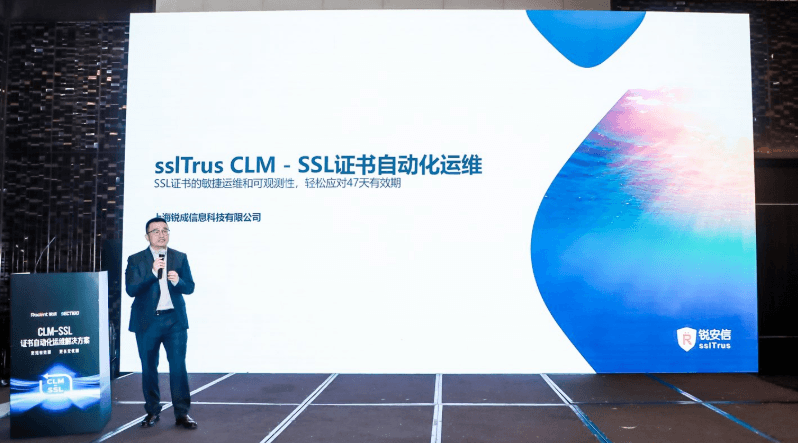
Introducing sslTrus CLM: Automated SSL Certificate Operations
Launched with Sectigo at a joint event, sslTrus CLM brings lifecycle automation, multi-CA support and centralized visibility to complex enterprise environments.
Read More
The fastest and most cost-effective choice for realizing HTTPS for a website. Only the domain name ownership needs to be verified, and it can be issued quickly within 3 to 5 minutes. The most favored digital trust foundation for individual webmasters, blogs, small and micro enterprises, and mini-program encryption applications!
Three specifications are provided: single domain name, multiple domain name and wildcard. The entire series is equipped with dual algorithms of RSA+ECC as standard and a high-value security insurance of $500,000.
One certificate protects a precise domain name. Only domain name verification is required and it will be issued at top speed.
One certificate protects the main domain name and all its subdomains, making it the top choice for cost performance.
One certificate centrally protects multiple completely different domain names, facilitating unified operations.
Through a strict handshake protocol, an invisible and immediate encrypted channel is established between the client and the server.
When the client accesses the site, the server returns an SSL certificate. The browser automatically verifies the certificate authority (CA), validity period and domain name match.
After the authentication is successful, the client generates a random "session key" and encrypts it using the public key that comes with the certificate, then securely sends it to the server.
After receiving the encrypted data, the server decrypts it with its own private key to obtain the session key. From then on, all data is symmetrically encrypted and transmitted through this key.
Backed by globally authoritative root certificate infrastructure, it offers a streamlined validation process and powerful encryption to help your business quickly build a security trust moat.
View version pricingAbandon the cumbersome manual review and verify domain name ownership through an automated API. The certificate can be issued in as fast as 3 minutes.
Fully supports up to 256-bit encryption strength and comes with a free commercial anti-counterfeiting compensation insurance of up to 500,000 US dollars.
Get the endorsement of an internationally recognized CA at an accessible price—a top choice for startups and SMBs moving to the cloud.
Exclusively optimized nodes for domestic network environments, providing millisecond-level localized status verification to ensure your website responds to handshakes within seconds.
With excellent ecosystem compatibility, it works across legacy and latest mainstream browsers, mobile devices and server architectures, ensuring smooth access for every visitor.
Deploying HTTPS is not only a security bottom line, but also a direct driver for bringing traffic, conversions and an authoritative brand image to your business.
Using industry-standard encryption algorithms, it establishes a high-strength secure tunnel that protects data confidentiality between client and server and effectively blocks sniffing attacks.
Imprint the globally authoritative security brand on the website, effectively prevent domain name DNS spoofing and phishing websites, eliminate users' security concerns from the source, and significantly improve business conversion rates.
The algorithms of mainstream search engines such as Google and Baidu strongly prefer HTTPS sites. Deploying an SSL certificate can bring you a higher natural search weight and stable traffic tilt.
Say goodbye to the prominent "Not secure" warning in Chrome and other mainstream browsers, delivering a smooth user experience and reducing page abandonment caused by security doubts.
Protects user passwords, sensitive private information and payment transaction data in line with the PCI/DSS standard and increasingly strict global privacy regulations.
After successful deployment, prominently light up the security lock logo in the address bar to directly convey to every visiting end customer the positive signal that your website has passed strict security certification.
The entire process of domain name ownership verification is fully automated (choose any one of DNS resolution, file, or email), and it can be issued within 3 to 5 minutes at the fastest. It is the fastest way for a website to go live via HTTPS.
Not low. DV and OV/EV use exactly the same TLS encryption algorithm and key length. The only difference lies in the identity verification level: DV does not display the enterprise name and is suitable for sites that do not need to prove the enterprise identity to visitors.
Yes. DV certificates require no business credentials and can be issued for personal blogs, portfolios and mini-program backends—a cost-effective choice for getting started with HTTPS.
Support. A DV wildcard certificate can protect a primary domain name and all its subdomains at the same level. There is no need for re-verification when new subdomains are added later, and the management cost is low.
A new certificate can be issued after completing the domain name verification once again before the expiration date. If there are many sites, it is recommended to use the sslTrus CLM/CaaS automated service. It automatically completes renewal and deployment before expiration without the need for manual intervention.
From SSL/TLS certificate discovery, enrollment and deployment to continuous monitoring, alerting and automatic renewal, sslTrus helps enterprises build a unified certificate automation platform—reducing the operational burden of growing certificate inventories and shorter validity periods.
Certificates Meet the Latest Security Baseline
Trusted certificates secure applications, servers, gateways and websites with HTTPS.
A lightweight, cloud-native subscription model that enables agile, automated deployment across public clouds and business nodes.
Scale signing with cloud HSM protection while keeping private keys secure.
Provides industry-standard tamper-proof authentication with a high level of trust for commercial software and e-commerce.
Encrypt and sign enterprise email to prevent phishing, tampering and interception.
Discover, monitor, deploy and renew certificates across your environment—automatically. Prevent outages caused by missed renewals.
Explore sslTrus updates, security trends and in-depth technical guidance.