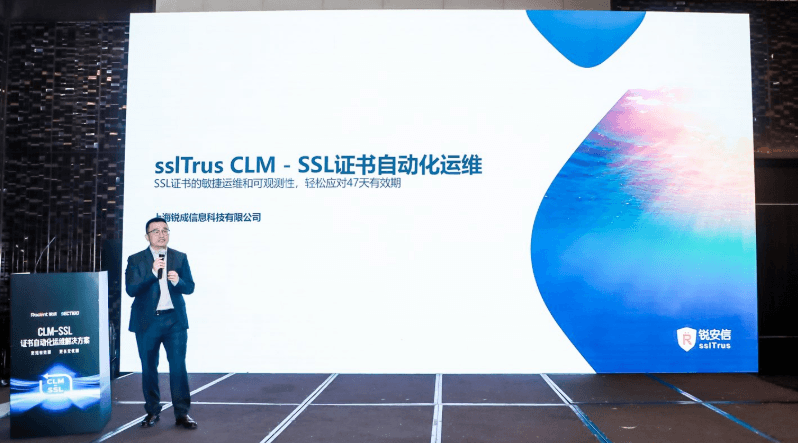
Introducing sslTrus CLM: Automated SSL Certificate Operations
Launched with Sectigo at a joint event, sslTrus CLM brings lifecycle automation, multi-CA support and centralized visibility to complex enterprise environments.
Read More
A Wildcard SSL certificate (Wildcard SSL or generic domain certificate) protects a primary domain and all secondary subdomains. It is flexible, allowing for free expansion of an unlimited number of subdomains, saving costs and facilitating certificate management. It is the preferred SSL certificate for small and medium-sized enterprises with multiple subdomains.
A single certificate simultaneously reinforces the main domain name and an unlimited number of secondary subdomains, supporting dynamic and real-time expansion, significantly reducing the overhead of certificate management.
One certificate protects all subdomains under one domain name. Only domain name verification is required, and the issuance speed is fast.
One certificate protects all subdomains under one domain name and requires authoritative enterprise identity verification.
Through a strict handshake protocol, an invisible and immediate encrypted channel is established between the client and the server.
When the client accesses the site, the server returns an SSL certificate. The browser automatically verifies the certificate authority (CA), validity period and domain name match.
After the authentication is successful, the client generates a random "session key" and encrypts it using the public key that comes with the certificate, then securely sends it to the server.
After receiving the encrypted data, the server decrypts it with its own private key to obtain the session key. From then on, all data is symmetrically encrypted and transmitted through this key.
Breaking the traditional cumbersome shackles of one map and one certificate, we use a highly flexible pan-domain name protection architecture to pave a minimalist management path for enterprise-level ecosystems with numerous subdomains.
View version pricingThe procurement threshold is extremely low. When new subdomains are added as business needs increase in the future, there is no need to purchase certificates repeatedly, achieving zero-cost and unlimited derivation.
The main domain and all its subordinate subdomains share a single certificate and are managed in a unified ledger, reducing the cumbersome workload of certificate renewal and replacement to the limit.
It offers up to 256-bit financial-grade physical data protection and comes with a commercial security loss compensation insurance of up to one million yuan depending on the version.
Eliminate connection risks across the entire site, safeguard the complex e-commerce sub-module clusters and order interfaces, and directly clear the conversion breakpoints.
Deeply align with the information security classification protection, network compliance regulations, and the strict online transaction information privacy norms and standards of various industries.
With an excellent multi-platform trust base, it is fully compatible with over 99.9% of mainstream web servers, legacy browsers and the latest mobile operating systems worldwide.
From the reinforcement of underlying data to the front-end visual trust, wildcard certificates serve as a golden signboard, fully activating the security potential of the entire generic domain name system.
Establish a comprehensive data protection tunnel to provide strong encryption protection for each sub-routing business line, cutting off any possibility of data sniffing and tampering.
Affix the official and genuine security seal to the entire generic domain name product line, effectively preventing DNS hijacking and phishing risks, and quickly establishing digital trust among visitors.
Satisfies search engine algorithms' preference for site-wide HTTPS encryption, helping your main domain and subchannels naturally earn higher search rankings.
Eliminate all glaring "unsafe" interception warnings in sub-sites (such as blogs, forums, and branch systems) at one stroke, providing an extremely smooth access experience.
Protects account passwords, sensitive privacy information and payment transaction data across all submodules, in line with increasingly strict data protection regulations.
When a user accesses any subdomain, a pure and highlighted security lock identifier can always be displayed in the address bar, invisibly sending a positive signal that the entire matrix is under 24/7 control.
A *. example.com certificate can protect the main domain name example.com and all its first-level subdomains (such as www, mail, api.example.com), but it cannot protect second-level subdomains like a. mail.example.com across levels. If you need to cover multiple levels or primary domains, you can choose a multi-domain wildcard certificate.
No need. After the wildcard Certificate Issuance, any new subdomain added at the same level is automatically protected without the need for re-application, verification or payment. It is particularly suitable for scenarios where business expands rapidly and subdomains are frequently added or removed.
Not supported. According to the CA/B forum specifications, EV certificates must clearly list each protected domain name, so wildcards only have two verification levels: DV and OV. If you need an EV to cover multiple domain names simultaneously, you can choose an EV multi-domain certificate.
Sure. The same certificate can be deployed to multiple servers for shared use, and the operations costs are the lowest when each subdomain is maintained independently. However, it is necessary to pay attention to the security management of private key distribution. It is recommended to cooperate with the Certificate Lifecycle Management(CLM) platform for unified hosting and automatic rotation.
Choosing wildcards to protect a large number of subdomains at the same level within the same main domain is more cost-effective and worry-free. Protect multiple completely different primary domains or cross-level subdomains by choosing a multi-domain (SAN) certificate; The two can also be combined into multi-domain wildcard certificates to flexibly cover complex domain architectures.
From SSL/TLS certificate discovery, enrollment and deployment to continuous monitoring, alerting and automatic renewal, sslTrus helps enterprises build a unified certificate automation platform—reducing the operational burden of growing certificate inventories and shorter validity periods.
Certificates Meet the Latest Security Baseline
Trusted certificates secure applications, servers, gateways and websites with HTTPS.
A lightweight, cloud-native subscription model that enables agile, automated deployment across public clouds and business nodes.
Scale signing with cloud HSM protection while keeping private keys secure.
Provides industry-standard tamper-proof authentication with a high level of trust for commercial software and e-commerce.
Encrypt and sign enterprise email to prevent phishing, tampering and interception.
Discover, monitor, deploy and renew certificates across your environment—automatically. Prevent outages caused by missed renewals.
Explore sslTrus updates, security trends and in-depth technical guidance.