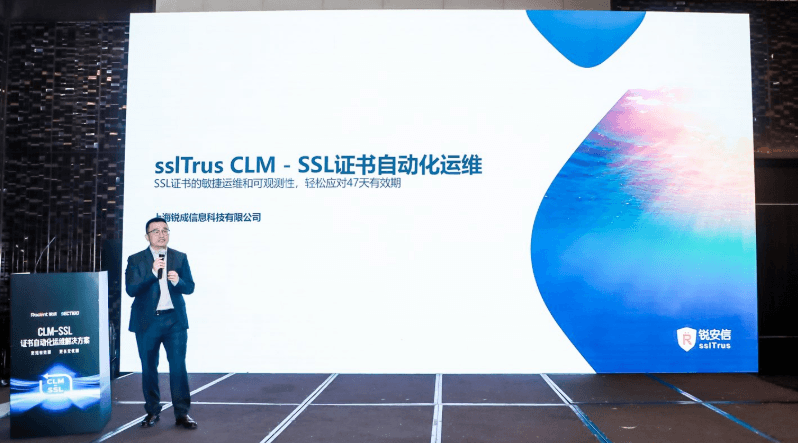
Introducing sslTrus CLM: Automated SSL Certificate Operations
Launched with Sectigo at a joint event, sslTrus CLM brings lifecycle automation, multi-CA support and centralized visibility to complex enterprise environments.
Read More
A multi-domain SSL certificate can protect multiple domain names (Subject Alternative Names), and therefore is also called SAN SSL or UCC SSL certificate. It supports adding multiple different main domains or subdomains, which is far more cost-effective than applying for each domain separately. It also simplifies the verification and renewal process and is the top choice for Exchange mail server encryption!
Manage from 3 up to hundreds of domains and subdomains with a single certificate, simplifying operational and procurement costs.
One certificate protects multiple domain names. Only domain name verification is required, and the issuance speed is extremely fast.
One certificate protects multiple domain names and simultaneously verifies the ownership of the domain names and the identity of the enterprise.
Financial-grade protection is provided for all bound domain names, and the highest-level enterprise identity verification is required.
Through a strict handshake protocol, an invisible and immediate encrypted channel is established between the client and the server.
When the client accesses the site, the server returns an SSL certificate. The browser automatically verifies the certificate authority (CA), validity period and domain name match.
After the authentication is successful, the client generates a random "session key" and encrypts it using the public key that comes with the certificate, then securely sends it to the server.
After receiving the encrypted data, the server decrypts it with its own private key to obtain the session key. From then on, all data is symmetrically encrypted and transmitted through this key.
Skip the hassle of buying separate certificates for each domain—one SAN certificate covers your whole ecosystem with a powerful encryption foundation and outstanding management convenience.
View version pricingCompared with purchasing multiple single-domain certificates separately, multi-domain certificates can significantly reduce procurement costs, and new SAN records can be expanded at any time in the future.
One certificate is simultaneously bound to dozens or even hundreds of completely different primary domains and subdomains, and the expiration time is uniformly monitored, greatly simplifying the renewal management.
Fully meet the official hard encryption requirements of multi-domain communication environments such as Microsoft Exchange Server and Office Communications Server.
It is equipped with high-specification asymmetric and symmetric encryption algorithms as standard, and offers commercial security anti-counterfeiting compensation of up to one million US dollars based on the version level.
Help various government, financial and e-commerce website clusters achieve the compliance requirements of the entire system with one click and smoothly pass industry data audits such as PCI-DSS.
With an excellent multi-platform trust base, it is compatible with over 99.9% of mainstream web servers, legacy browsers and the latest mobile systems worldwide.
A SAN certificate endows complex application clusters with a unified digital defense shield, fully activating the security potential of the entire digital ecosystem.
Establish a comprehensive strongly encrypted data tunnel for all bound different main domains and subdomains to block any possibility of network sniffing and data tampering.
Mark the different brand lines and service interfaces under the group with a unified official genuine security imprint to effectively prevent the risk of counterfeiting and phishing, and build the trust of visitors.
Solve the HTTPS coverage of all domain names at one time, meet the priority inclusion and weight enhancement algorithms of mainstream search engines, and help the entire matrix achieve high traffic.
Batch eliminate the "Unsafe" red interception warning that occurs during cross-system jumps to ensure an extremely smooth user experience during complex business flow processes.
Whether it is the transaction flow of the main site or the data flow of the API domain, it can ensure that account passwords and sensitive privacy information meet the world's strictest data regulations.
All protected domain name address bars will be illuminated with an authoritative security lock symbol, invisibly transmitting a highly encrypted defense signal to each connection.
By default, it includes several domain name quotas, which can be expanded as needed. For mainstream brands, a single certificate can bind up to approximately 250 domain names (SAN), fully covering the unified encryption requirements of multiple enterprise sites and multi-brand matrices.
Sure. One certificate can be mixed and bound to multiple completely different main domains and subdomains of any level (including cross-level subdomains such as a. mail.example.com), which is particularly suitable for multi-brand sites and email systems of groups. If you need to protect public IP addresses, please choose a dedicated IP SSL certificate.
Sure. During the validity period of the certificate, you can add a new SAN domain name at any time by paying. After the CA verification is passed, the certificate will be reissued and the deployment will be replaced. The existing domain name will not be affected and there is no need to wait until the renewal fee to make adjustments.
Wildcards govern "an infinite number of subdomains at the same level as the same primary domain", while multi-domain governs "multiple completely different domain names". Multi-domain certificates support full verification levels of DV/OV/EV, while wildcards do not support EV. The two can also be combined into a multi-domain wildcard certificate, taking into account both scenarios.
Exchange and Skype for Business need to protect multiple different hostnames such as mail, autodiscover, and owa simultaneously. Microsoft officially recommends using SAN/UCC certificates. A multi-domain certificate can cover all service domains, avoiding deployment conflicts and operations burdens caused by multiple certificates.
From SSL/TLS certificate discovery, enrollment and deployment to continuous monitoring, alerting and automatic renewal, sslTrus helps enterprises build a unified certificate automation platform—reducing the operational burden of growing certificate inventories and shorter validity periods.
Certificates Meet the Latest Security Baseline
Trusted certificates secure applications, servers, gateways and websites with HTTPS.
A lightweight, cloud-native subscription model that enables agile, automated deployment across public clouds and business nodes.
Scale signing with cloud HSM protection while keeping private keys secure.
Provides industry-standard tamper-proof authentication with a high level of trust for commercial software and e-commerce.
Encrypt and sign enterprise email to prevent phishing, tampering and interception.
Discover, monitor, deploy and renew certificates across your environment—automatically. Prevent outages caused by missed renewals.
Explore sslTrus updates, security trends and in-depth technical guidance.