Introducing sslTrus CLM: Automated SSL Certificate Operations
Launched with Sectigo at a joint event, sslTrus CLM brings lifecycle automation, multi-CA support and centralized visibility to complex enterprise environments.
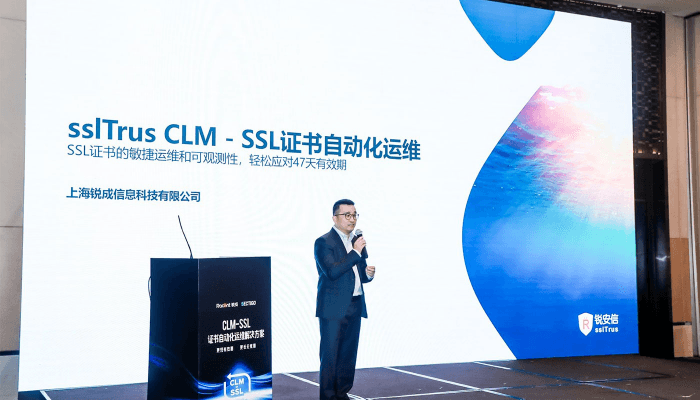
SSL certificates are an important part of securing enterprise digital services. With the CA/Browser Forum’s approval of SC-081v3, the maximum validity of newly issued publicly trusted TLS certificates is being reduced in stages from 398 days to 47 days. To address the resulting operational challenge, Shanghai Ruicheng Information Technology Co., Ltd. (Racent) and Sectigo jointly held a launch event for certificate lifecycle automation solutions.
The event introduced sslTrus CLM, an SSL certificate operations automation system designed for medium-sized and large enterprises and complex network environments. It helps teams move repetitive certificate work out of manual workflows and into a centrally managed lifecycle.
Three capabilities for shorter certificate lifetimes
Shorter lifetimes mean more renewal and deployment work, more opportunities for configuration mistakes and greater pressure to prevent expiry-related outages. sslTrus CLM addresses these challenges through lifecycle automation, support for varied environments and centralized management.
1. Automating the SSL certificate lifecycle
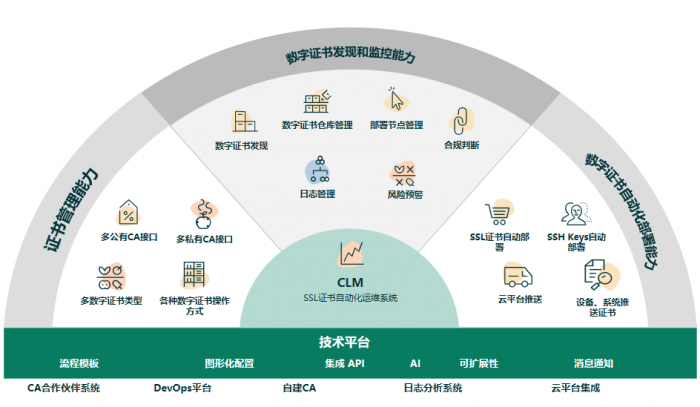
sslTrus CLM supports automated renewal, distribution, deployment, discovery, monitoring and alerts. Organization-information prevalidation and automated domain-control validation help streamline issuance where supported by the relevant CA and workflow. Together, these capabilities reduce repetitive tasks and help teams manage operational risk.
2. Multiple CAs and heterogeneous deployments
The launch announcement described integrations with public and private CAs, including CFCA, sslTrus, Sectigo, DigiCert, GlobalSign, SHECA, vTrus and Microsoft CA.
Deployment environments included web and application servers such as Apache, Nginx, IIS, Tomcat and Exchange; cloud platforms such as Alibaba Cloud, Tencent Cloud, Azure and AWS; and SSL gateways, WAFs and Kubernetes. The product also supports China’s domestic IT ecosystem, including relevant operating systems and browsers using Chinese cryptographic algorithms.
These integrations enable centralized certificate distribution and renewal across different platforms and environments, helping address the fragmentation common in hybrid-cloud infrastructure. The exact supported version and deployment method should be checked for each integration.
3. Observability and centralized control
Certificate discovery helps identify certificates within the organization’s authorized scan scope. Combined with configurable compliance rules and Certificate Transparency log monitoring, it gives teams visibility into certificate status and anomalies.
Alert subscriptions and notifications through multiple channels help teams act before expiration. Logging supports traceability, auditing and operational control. Discovery coverage depends on access, network reachability and configuration; it should not be understood as a guarantee that every certificate can always be found.
Security, efficiency and compatibility
-
Security: Layered controls cover the certificate management workflow, from transmitting application data and storing system information to monitoring and logging.
-
Efficiency: Lifecycle automation and batch operations for certificates and server nodes reduce repetitive administration and support management at scale.
-
Compatibility: Multi-cloud and hybrid-cloud infrastructure often combines different servers and certificates from multiple CAs. sslTrus CLM brings these sources and deployment targets into a unified management approach.
-
Scalability: As a business grows, its certificate inventory may expand from hundreds to many thousands, with changing certificate requirements. The platform is designed to expand with those needs.
-
Continuous improvement: Ongoing updates develop product capabilities and refine the user experience as security technologies and enterprise requirements evolve.
The launch positioned sslTrus CLM as a way to prepare for 47-day certificates while building more sustainable certificate operations. Its intended users include larger enterprises and organizations in finance, telecommunications and government with complex networks, domestic-technology requirements or sector-specific compliance needs. Suitability and compliance still depend on the organization’s implementation and applicable requirements.
For smaller businesses with lighter certificate requirements, sslTrus CaaS offers a subscription-based approach to automating certificate operations. Racent also described continued development of CLM to support a broader, more automated certificate management environment.
To learn more, contact us or visit the sslTrus CLM product page to request a demonstration.