Racent and Sectigo Launch Certificate Automation Solutions in Beijing
More than 100 IT and security professionals joined Racent and Sectigo on October 28, 2025 to explore certificate automation for shorter SSL lifetimes.
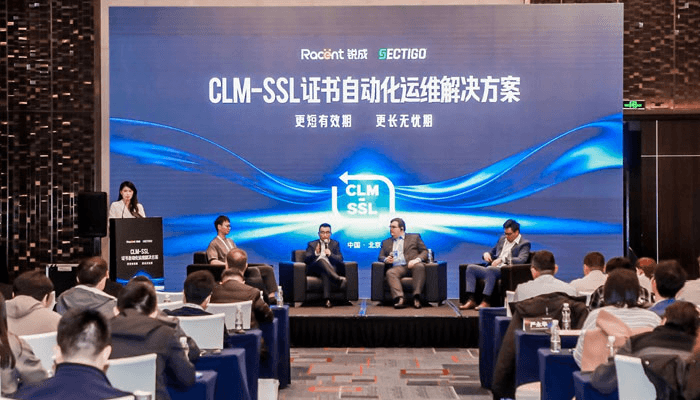
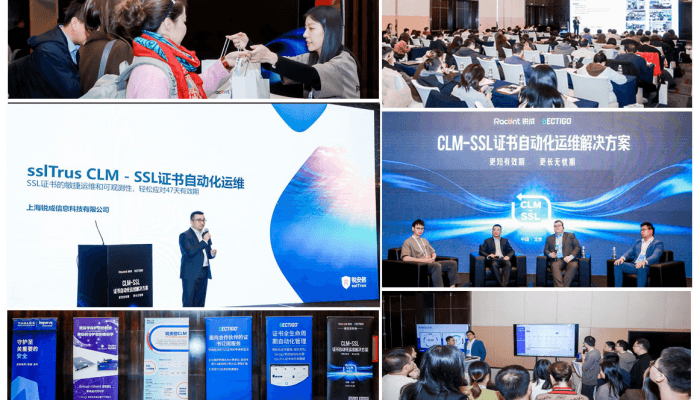
On the afternoon of October 28, 2025, Racent and certificate authority Sectigo jointly held a launch event for CLM and SSL certificate operations automation in Beijing. More than 100 enterprise IT leaders, security operations specialists and technical decision-makers attended to explore the challenges of managing 47-day SSL certificates.
Under the theme “Shorter Validity, Longer Peace of Mind,” the event brought together participants from finance, internet services, technology and manufacturing. Product announcements and practical demonstrations showed how organizations could prepare their certificate operations for shorter lifetimes. According to the event report, attendees responded positively to the combination of forward-looking discussion and hands-on examples.
A new operational approach to an industry-wide change
Following the CA/Browser Forum’s approval of SC-081v3, the maximum validity of newly issued publicly trusted TLS certificates is set to decrease in stages beginning in 2026, reaching 47 days in 2029. More frequent renewals put pressure on manual processes, increasing workload and the opportunities for configuration errors and service interruption.
The launch addressed this transition through three themes: industry developments, product capabilities and practical demonstrations. Its focus was helping enterprises develop a more sustainable way to manage certificate operations.
Technical leaders discuss the shift to automation
The event attracted technical decision-makers from a range of industries. Many arrived with specific certificate management problems from their own organizations, reflecting demand for more efficient operational solutions.
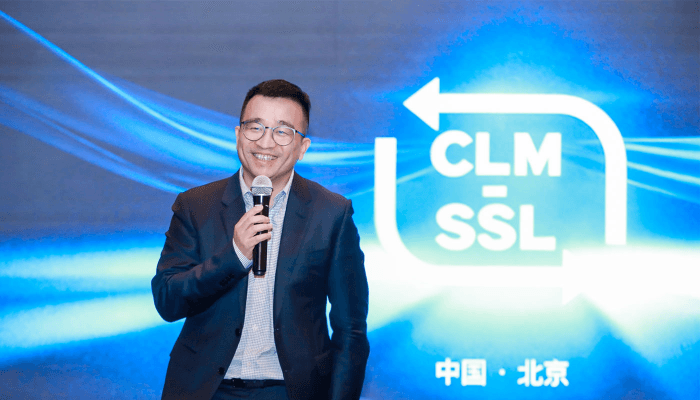
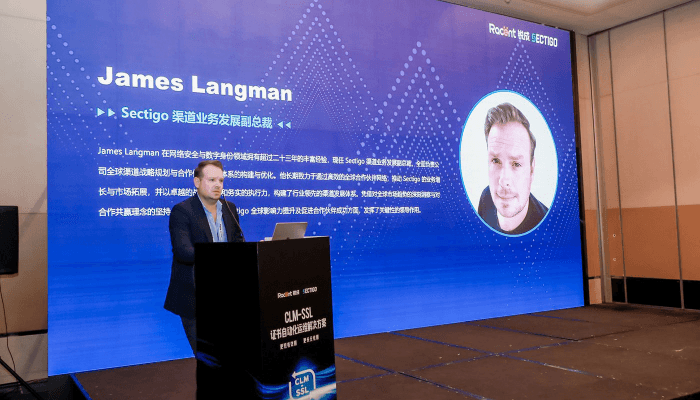
In the opening address, James Langman, introduced at the event as Sectigo’s Vice President of Channel Business Development, discussed the industry transition from a global perspective. He emphasized the importance of automation to business continuity and security, setting the context for the solutions presented next.
Two certificate lifecycle platforms introduced
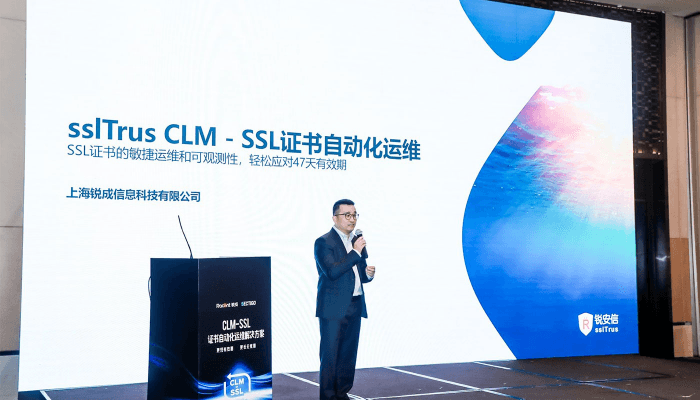
Racent and Sectigo presented sslTrus CLM and Sectigo SCM, explaining the design and capabilities of each. The lightweight, subscription-based sslTrus CaaS service was also introduced for smaller organizations, complementing CLM’s enterprise-oriented approach.
1. sslTrus CLM
Designed for medium-sized and large enterprises and complex networks, the sslTrus certificate operations automation system centralizes certificate issuance and deployment configuration. It supports multiple CAs and China’s domestic IT ecosystem, with automated renewal, distribution, deployment, discovery, monitoring and alerts. These capabilities help reduce repetitive manual work and its associated operational risks.
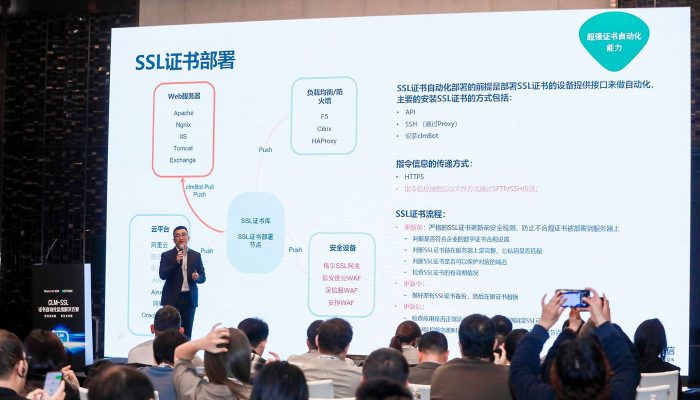
The presentation covered three core capability areas.
SSL certificate management:
- Public and private CA integrations, including CFCA, sslTrus, Sectigo, DigiCert, GlobalSign, SHECA, vTrus and Microsoft CA.
- Certificate application and automated issuance, switching certificate brands or types, automated reissuance and renewal, organization-information prevalidation and automated domain-control validation, subject to the relevant CA’s supported workflows.
Automated certificate deployment across heterogeneous environments:
- Certificate updates on supported security gateways and hardware.
- Updates on different web servers.
- Updates on supported cloud platforms.
- Kubernetes certificate updates.
- Custom certificate update schedules.
- Deployment through SSH, including SSH Proxy, APIs or clmBot, depending on resource type. The linked clmBot update guide is in Chinese.
Operational observability:
- Automated certificate discovery and monitoring.
- Configurable certificate compliance rules.
- Alert subscriptions and notifications.
- Log management and integrations.
- Certificate Transparency log monitoring.
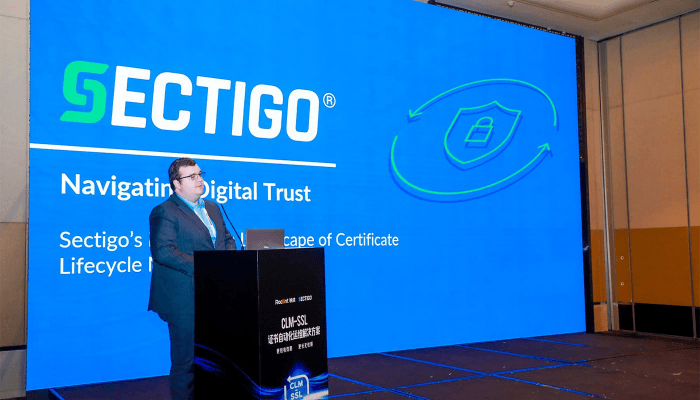
2. Sectigo SCM
Sectigo SCM uses ACME-based automation to manage the application and deployment of Sectigo digital certificates. Its capabilities include discovery, issuance, installation, renewal, revocation, compliance review and reporting. The presentation showed how these functions can support certificate operations across international business environments. Compliance outcomes depend on the applicable policy, configuration and deployment, rather than the platform alone.
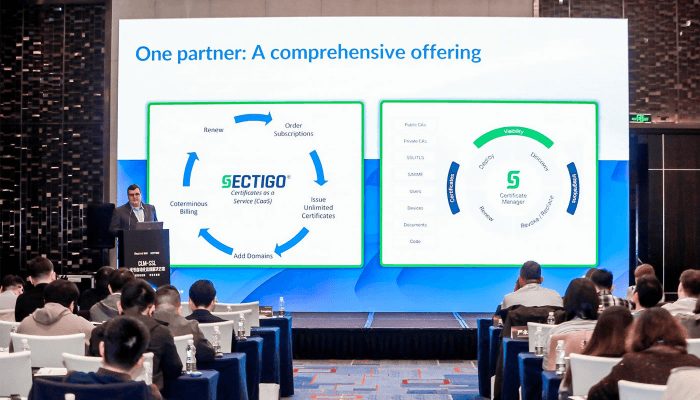
Live demonstrations put the workflows into context
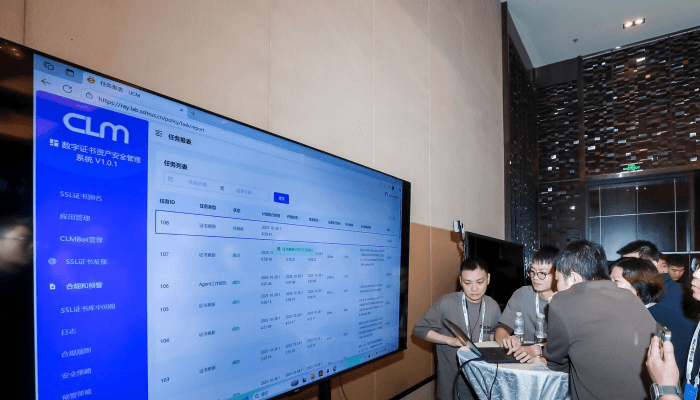
After the product presentations, technical engineers from Racent and Sectigo demonstrated both solutions. The sessions focused on:
- Unified multi-CA certificate management, monitoring and alerts.
- Automated SSL certificate deployment across different environments.
- Certificate compliance checks and log management.
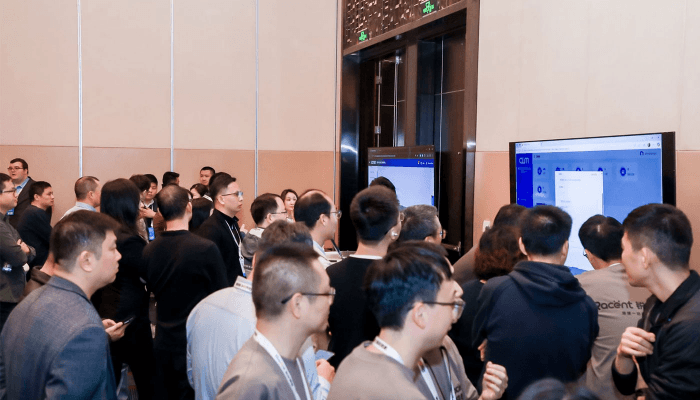
Attendees recorded parts of the demonstrations and continued discussions with the technical teams afterward, asking about product details and solutions for their own deployment scenarios.
Attendee discussions focus on practical implementation
During the question-and-answer session, guests discussed certificate management difficulties from their own businesses with Racent’s team.
According to the event report, several attendees said the sessions clarified how to prepare for 47-day certificates and introduced practical automation options. They expressed interest in further collaboration to improve operational efficiency, manage costs and reduce security risks.
Continuing beyond the launch
The launch presented Racent’s approach to certificate automation and an operational response to shorter certificate lifetimes.
At the time of the event, Racent described plans to refine sslTrus CLM and explore additional solutions, including remote code signing, SSH key lifecycle management and client certificate CLM. These were the development plans described in October 2025, not a claim that every planned capability was already available.
Racent invited enterprises to continue the discussion and work toward a more automated, manageable certificate environment.
For more information, contact us, or explore sslTrus CLM and sslTrus CaaS.